

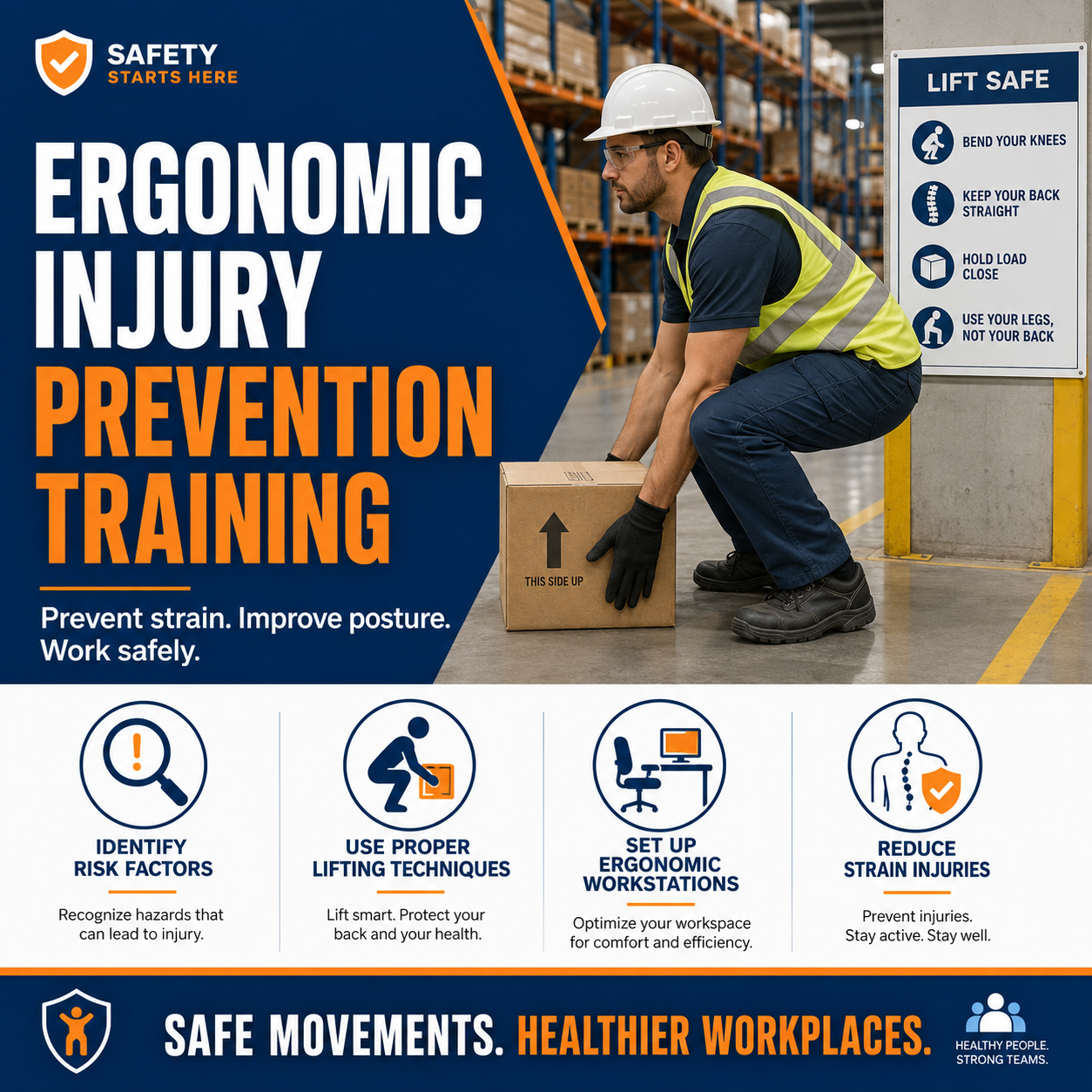
Ergonomic Injury Prevention Training
Course Overview
Ergonomic risks often build gradually through repetitive movement, awkward posture, excessive force, poor workstation design, manual handling, and tasks that place unnecessary strain on the body. This course helps learners recognise those risks earlier and make practical improvements before discomfort develops into a more serious work-related problem.
The training is designed around real workplace decisions. Learners explore how task design, working height, reach distance, tool selection, lifting technique, repetition, duration, and recovery time can influence physical strain, and how relatively simple changes can often improve both comfort and performance.
Why This Training Matters
Musculoskeletal problems can affect attendance, productivity, concentration, morale, and the ability to perform work consistently. Because many ergonomic hazards become familiar over time, they can be overlooked until discomfort or reduced capability is already affecting the individual or the team.
This course helps turn ergonomics into a practical prevention discipline. It gives employees and supervisors a clearer way to identify high-risk tasks, discuss early symptoms, prioritise improvements, and support work design that better fits the people performing it.
What This Training Helps You Achieve
Recognise Ergonomic Risk Earlier
Use practical cues such as force, repetition, posture, reach, duration, and task frequency to identify work that may create unnecessary strain.
Improve Tasks and Workstations
Explore practical changes to working height, layout, tools, handling methods, and workflow that can reduce awkward or excessive physical demands.
Strengthen Manual Handling Decisions
Build better awareness of lifting, carrying, positioning, and movement strategies that can reduce avoidable load and poor posture.
Support Early Intervention
Understand why early reporting, employee participation, and simple ergonomic improvements can help prevent minor discomfort from becoming a larger workplace issue.
Learning Outcomes
By the end of this course, learners should be able to:
- Identify common ergonomic risk factors, including force, repetition, awkward posture, duration, and poor task design.
- Review routine tasks and recognise opportunities to improve working height, reach, tool choice, layout, and workflow.
- Apply safer lifting and handling principles that reduce unnecessary load and awkward body positions.
- Explain the importance of reporting early symptoms and responding before discomfort becomes more persistent.
- Contribute to practical ergonomic improvements using worker feedback, observation, and simple performance measures.
- Support a more proactive workplace approach to musculoskeletal injury prevention and employee wellbeing.
Who This Is For
- Employees carrying out manual, repetitive, computer-based, or physically demanding tasks.
- Supervisors and team leaders responsible for work allocation, task design, or day-to-day performance.
- Safety and occupational health teams supporting injury prevention and workplace improvement.
- Ergonomics champions, trainers, and managers involved in workstation or process improvement.
- Organisations seeking practical ways to reduce avoidable physical strain and improve how work is designed.
Good ergonomics is not about making work easier at the expense of performance. It is about designing work more intelligently so people can perform tasks safely, consistently, and effectively. This course gives learners practical tools they can apply immediately in everyday work.
Related Topics
Ergonomics, Ergonomics course, Ergonomics online training, Ergonomic hazards, Ergonomic hazards course, Musculoskeletal injury prevention, Workstation setup, Manual handling, Body mechanics, Repetitive strain, Safe lifting, Risk assessment, Employee wellbeing, Workplace safety, Occupational health