
Course Overview
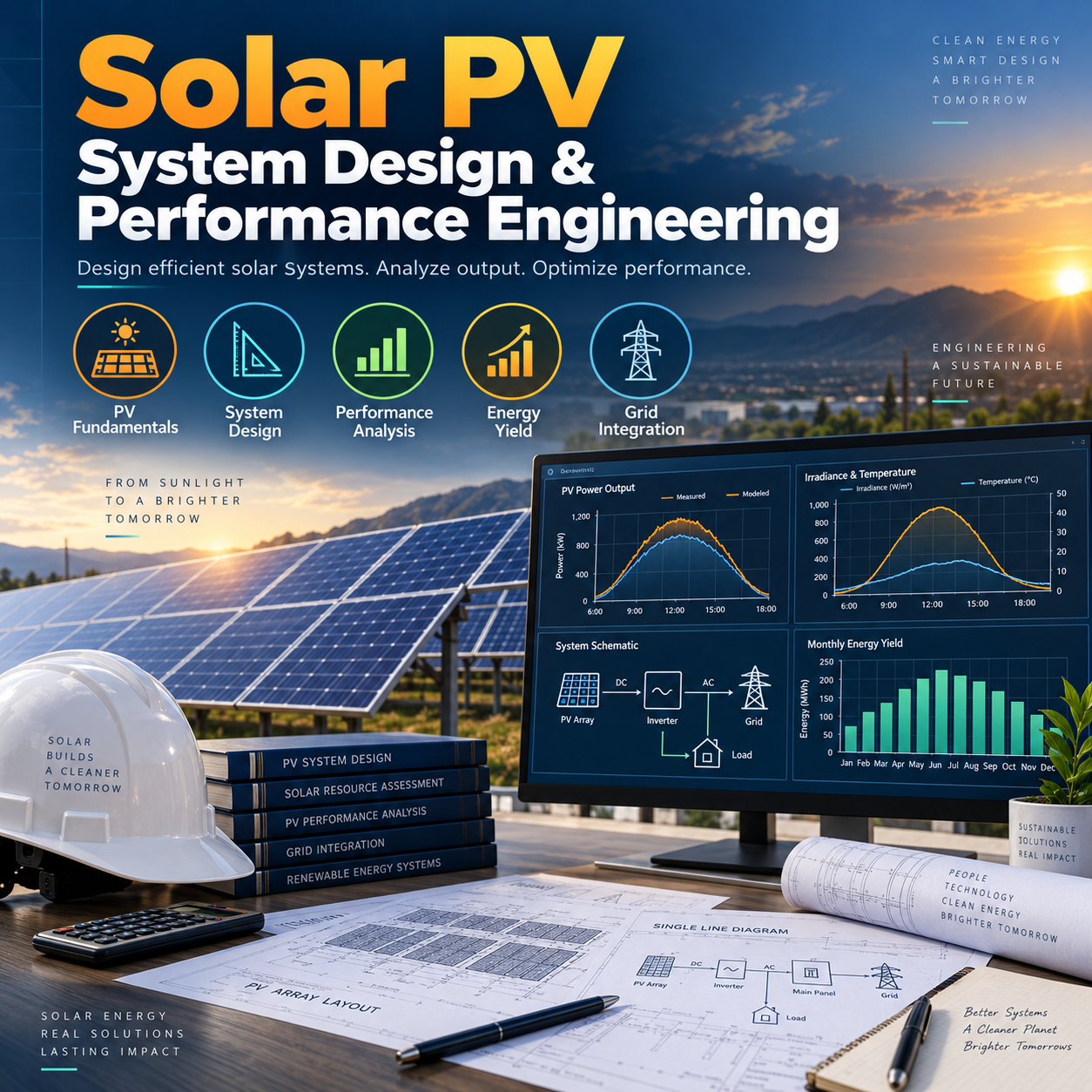
Solar PV System Design & Performance Engineering
Move from solar fundamentals to engineering decisions that determine PV system output, reliability, and lifecycle performance.
Develop capability in PV array sizing, system architecture, shading, energy yield, losses, inverter selection, and performance assessment.
Why This Course Matters
PV performance depends on far more than module nameplate power. Resource conditions, orientation, shading, electrical configuration, inverter selection, temperature, losses, and degradation all influence energy yield and project performance.
Energy projects increasingly demand engineers who can connect fundamental physics with equipment behaviour, system integration, efficiency, lifecycle performance, and technical economics. A stronger systems view helps professionals evaluate technologies more critically and support more defensible energy decisions.
This course is designed to close that capability gap with structured, engineering-focused learning that strengthens both technical understanding and professional judgement.
What This Training Helps You Achieve
Develop capability in PV array sizing, system architecture, shading, energy yield, losses, inverter selection, and performance assessment. The training is designed to help you apply this knowledge with greater confidence across system design, performance assessment, integration, operations, and project evaluation, while making assumptions, limitations, and technical reasoning easier to explain and defend.
Why Engineers Take This Course
Translate solar resource into system design
Develop stronger capability in solar resource, irradiance, geometry, and site considerations, and use that understanding to support more credible decisions in system design, performance assessment, integration, operations, and project evaluation.
Quantify losses and realistic energy yield
Develop stronger capability in dc/ac ratio and inverter operating limits, and use that understanding to support more credible decisions in system design, performance assessment, integration, operations, and project evaluation.
Evaluate PV performance across the asset life
Develop stronger capability in performance assessment, degradation, troubleshooting, and lifecycle thinking, and use that understanding to support more credible decisions in system design, performance assessment, integration, operations, and project evaluation.
What You’ll Explore
- Solar resource, irradiance, geometry, and site considerations
- PV module electrical behaviour and temperature effects
- Series and parallel array configuration
- String sizing and inverter matching
- DC/AC ratio and inverter operating limits
- Shading, mismatch, soiling, wiring, and conversion losses
- Energy-yield estimation and performance ratio
- System architecture, protection, monitoring, and reliability considerations
- Performance assessment, degradation, troubleshooting, and lifecycle thinking
Learning Outcomes
By the end of this course, you will be able to:
- Explain and apply the core principles associated with solar resource, irradiance, geometry, and site considerations.
- Interpret engineering information related to pv module electrical behaviour and temperature effects.
- Evaluate practical considerations involving series and parallel array configuration.
- Recognise key assumptions, limitations, and risks associated with dc/ac ratio and inverter operating limits.
- Use structured engineering judgement when working with system architecture, protection, monitoring, and reliability considerations.
- Connect analysis and technical evidence with performance assessment, degradation, troubleshooting, and lifecycle thinking.
- Approach solar pv system design & performance engineering work with greater technical confidence, discipline, and credibility.
Who This Is For
- Energy and electrical engineers moving into solar PV design
- Mechanical and multidisciplinary engineers working on renewable projects
- Solar project, technical, and asset-management professionals
- Engineers reviewing PV performance or system proposals
- Professionals progressing beyond introductory solar and battery knowledge
Why Build This Skill Now
Engineering teams are expected to make faster decisions while still demonstrating sound technical judgement, traceability, and awareness of risk. Building capability in solar pv system design & performance engineering gives you a stronger basis for reviewing assumptions, challenging weak conclusions, and contributing more effectively when technical decisions matter.
If you want to strengthen your understanding of this subject, improve the quality of your engineering judgement, and build capability that can be applied across real projects, this course is a strong next step.
Related Topics
solar PV design, photovoltaic system design, PV system sizing, solar energy, PV performance, solar array design, inverter sizing, PV energy yield, solar shading analysis, photovoltaic engineering, solar system losses, PV module selection, solar power systems, renewable energy, PV performance ratio