-
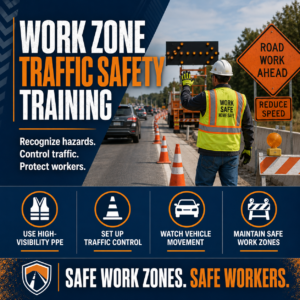 Work zone traffic safety: traffic control plans, signage, worker visibility, vehicle?pedestrian separation, spotter practices, and response steps to reduce struck?by and intrusion risks.
 -
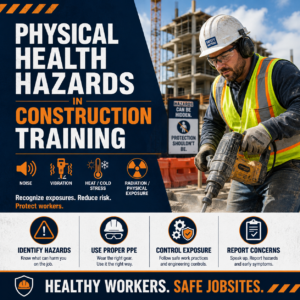 Practical training on Physical Health Hazards in Construction Training covering key hazards, safe work practices, and control measures, with simple checklists and reporting steps to help prevent incidents and improve safety performance.
 -
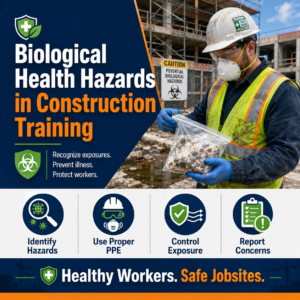 Practical training on Biological Health Hazards in Construction Training covering key hazards, safe work practices, and control measures, with simple checklists and reporting steps to help prevent incidents and improve safety performance.
 -
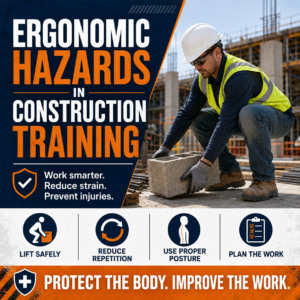 Construction ergonomics training covering manual handling, awkward postures, repetitive work, and tool/work-practice improvements to reduce musculoskeletal injuries on site.
 -
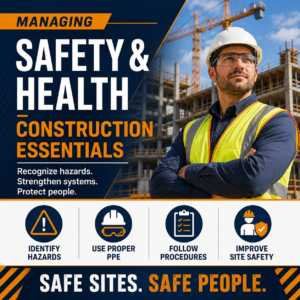 Practical training on Managing Safety & Health - Construction Essentials covering key hazards, safe work practices, and control measures, with simple checklists and reporting steps to help prevent incidents and improve safety performance.
 -
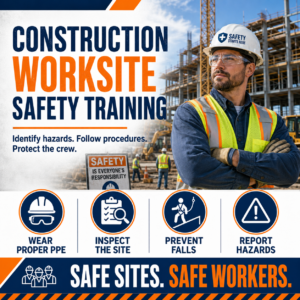 Worksite safety for construction crews covering common site hazards, access control, traffic and pedestrian separation, housekeeping, tool safety, and reporting for safer daily operations.
 -
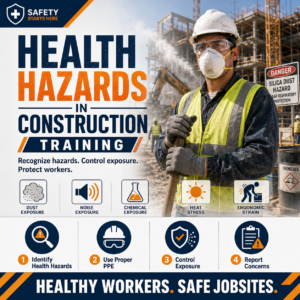 Practical training on Health Hazards in Construction Training covering key hazards, safe work practices, and control measures, with simple checklists and reporting steps to help prevent incidents and improve safety performance.
 -
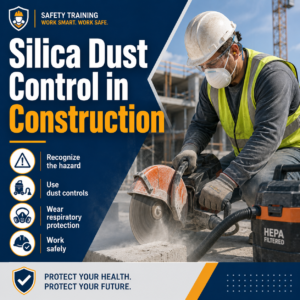 Silica dust control for construction: task-based risk recognition, wet methods and dust extraction, housekeeping, and respiratory protection awareness to reduce respirable crystalline silica exposure.
 -
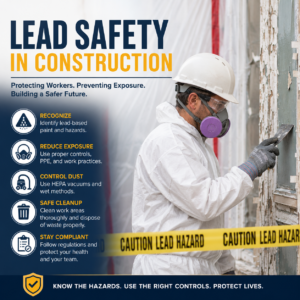 Lead safety (Construction) covering health effects, exposure routes, high-risk tasks, engineering controls, hygiene practices, PPE/respiratory awareness, and program elements to reduce exposure and support compliance.
 -
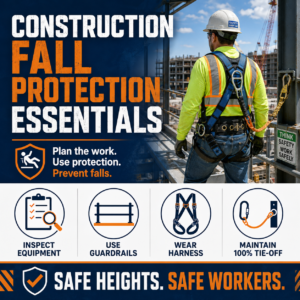 Construction fall protection essentials covering leading fall hazards, guardrails, personal fall arrest basics, ladder/scaffold awareness, and planning and supervision practices to reduce falls from height.
 -
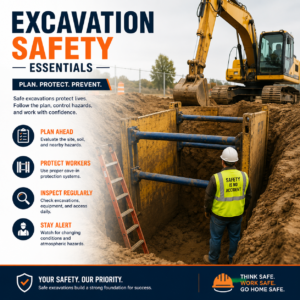 Excavation safety essentials: hazard recognition, protective system basics, competent person inspections, spoil placement, access/egress, and utility awareness to prevent cave?ins and struck?by incidents.
 -
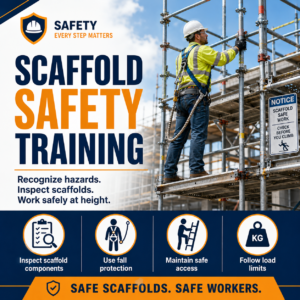 Scaffold safety training covering safe access, platform integrity, guardrails, load limits, and inspection checks to reduce fall risks and structural instability.
 -
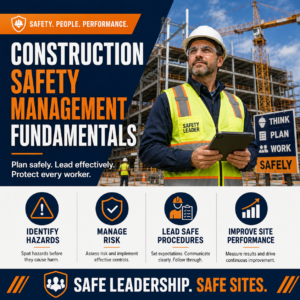 Construction safety management fundamentals: leadership duties, permits, supervision, contractor coordination, and inspections to control high?risk activities and reduce incidents.
 -
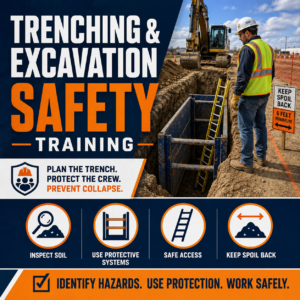 Trenching and excavation safety: soil assessment, protective systems (sloping/shoring/shielding), access/egress, utility hazard controls, inspections, and emergency response to prevent cave?ins.
 -
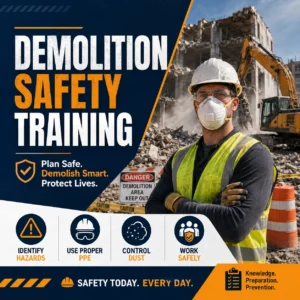 Demolition safety training covering pre-job surveys, structural stability, utility isolation, debris handling, equipment hazards, dust controls, and exclusion zones to reduce collapse and struck?by risks.
 -
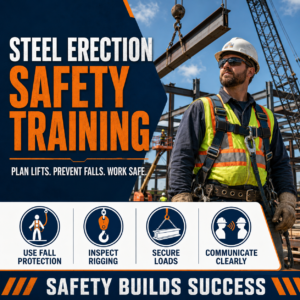 Steel erection safety training covering fall protection, rigging and hoisting awareness, column stability, decking practices, and coordination to control high?risk structural steel activities.