
Course Overview
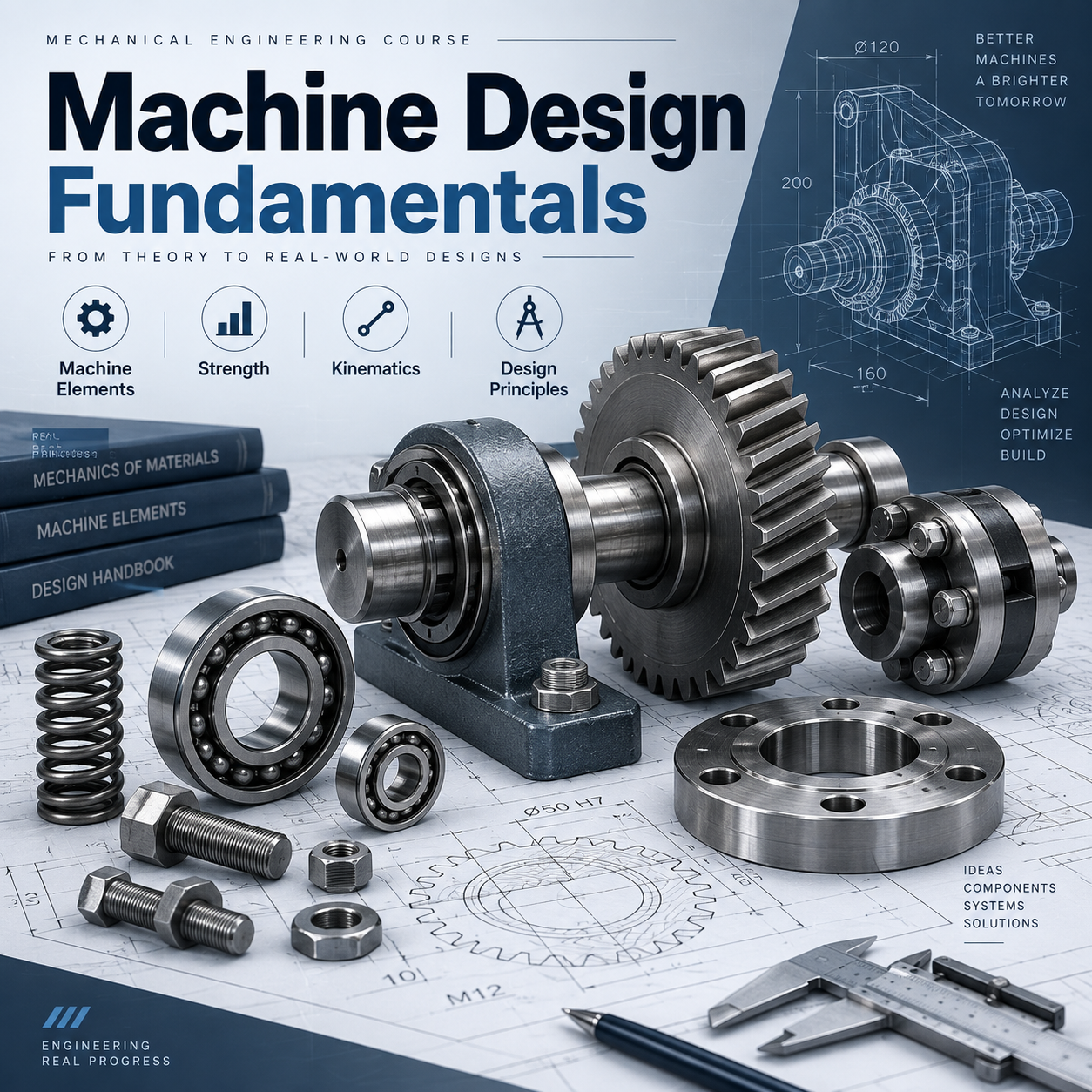
Machine Design Fundamentals
Build the practical design judgement needed to size, select, and assess common mechanical components.
Learn core mechanical design methods for shafts, bearings, gears, springs, fasteners, and other common machine elements.
Why This Course Matters
Mechanical systems depend on components such as shafts, bearings, gears, springs, and fasteners working together under real loads. Weak component selection or incomplete design calculations can lead to excessive deformation, premature wear, fatigue failure, poor reliability, and expensive redesign.
Modern mechanical design depends on the ability to translate requirements into geometry, calculations, simulation evidence, manufacturing definition, and verification. The strongest engineers understand both the analytical method and the practical consequences of the design choices they make.
This course is designed to close that capability gap with structured, engineering-focused learning that strengthens both technical understanding and professional judgement.
What This Training Helps You Achieve
Learn core mechanical design methods for shafts, bearings, gears, springs, fasteners, and other common machine elements. The training is designed to help you apply this knowledge with greater confidence across design, analysis, verification, manufacturing, and engineering review, while making assumptions, limitations, and technical reasoning easier to explain and defend.
Why Engineers Take This Course
Size common machine elements with confidence
Develop stronger capability in mechanical design process, requirements, load cases, and safety factors, and use that understanding to support more credible decisions in design, analysis, verification, manufacturing, and engineering review.
Connect loads to realistic failure modes
Develop stronger capability in gear geometry, transmitted loads, ratios, and basic design checks, and use that understanding to support more credible decisions in design, analysis, verification, manufacturing, and engineering review.
Design for reliable service and manufacture
Develop stronger capability in material selection, manufacturability, tolerances, and reliability in machine design, and use that understanding to support more credible decisions in design, analysis, verification, manufacturing, and engineering review.
What You’ll Explore
- Mechanical design process, requirements, load cases, and safety factors
- Stress, deformation, stiffness, and failure criteria in component design
- Shaft sizing for combined bending and torsion
- Bearing selection, rating life, fits, and lubrication considerations
- Gear geometry, transmitted loads, ratios, and basic design checks
- Spring types, stiffness, stress, and fatigue considerations
- Fasteners, keys, splines, couplings, and power-transmission components
- Static and fatigue design approaches for machine elements
- Material selection, manufacturability, tolerances, and reliability in machine design
Learning Outcomes
By the end of this course, you will be able to:
- Explain and apply the core principles associated with mechanical design process, requirements, load cases, and safety factors.
- Interpret engineering information related to stress, deformation, stiffness, and failure criteria in component design.
- Evaluate practical considerations involving shaft sizing for combined bending and torsion.
- Recognise key assumptions, limitations, and risks associated with gear geometry, transmitted loads, ratios, and basic design checks.
- Use structured engineering judgement when working with static and fatigue design approaches for machine elements.
- Connect analysis and technical evidence with material selection, manufacturability, tolerances, and reliability in machine design.
- Approach machine design fundamentals work with greater technical confidence, discipline, and credibility.
Who This Is For
- Mechanical engineers developing or reviewing machine components
- Design engineers moving from CAD modelling into engineering calculations
- Manufacturing and maintenance engineers who need stronger design insight
- Graduate and early-career engineers building machine-design fundamentals
- Technical professionals involved in machinery, equipment, and product development
Why Build This Skill Now
Engineering teams are expected to make faster decisions while still demonstrating sound technical judgement, traceability, and awareness of risk. Building capability in machine design fundamentals gives you a stronger basis for reviewing assumptions, challenging weak conclusions, and contributing more effectively when technical decisions matter.
If you want to strengthen your understanding of this subject, improve the quality of your engineering judgement, and build capability that can be applied across real projects, this course is a strong next step.
Related Topics
machine design, mechanical design, machine elements, shaft design, bearing selection, gear design, spring design, fastener design, mechanical components, design calculations, mechanical engineering, static loading, fatigue design, power transmission, design safety factors