-
 Slips, trips, and falls account for a significant number of workplace incidents. This course empowers employees to identify potential risks, proactively address hazards, and maintain excellent housekeeping standards. Together, we can enhance safety awareness and significantly reduce the likelihood of injury, fostering a healthier work environment for everyone.
 -
 Construction contractors are embracing the powerful connection between safety, productivity, and quality like never before! Join us in creating a safer and more efficient work environment.
 -
 Join us on this exciting adventure and unlock your full potential as an entrepreneur!
 -
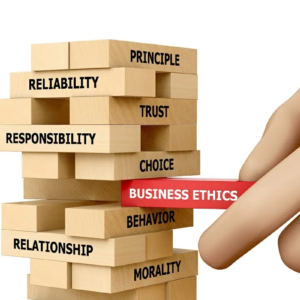 Learn how to conduct an ethical self-check, apply ethical standards to your work with stakeholders and coworkers, and report any ethical issues.
 -
 Intellectual Property Rights, IPR, IPR for startup, Copyright law, Trademark protection, IP commercialization and licensing, IP enforcement and litigation, Trade secrets and confidentiality, IP enforcement, WIPO, TRIPS
 -
 When it comes to Health and Safety, our courses are a fundamental part of ensuring the workplace is both safe and compliant. These practical courses are designed to enhance your knowledge of safe working practices, mitigate risks, and foster a more compliant and safer work environment.
 -
 Cultivating a professional online network is key to career advancement and securing new job opportunities. This course not only explores the value of networking but also equips you with practical strategies for connecting with decision-makers across various industries.
 -
 This course is designed to help you advance your career by thoroughly examining the executive leadership qualities that distinguish the best from the rest. Discover the importance of establishing a comprehensive foundation and direction, crafting a compelling vision for your company's future, motivating your staff to excel, and more.
 -
 Material science course
 -
 In most cyber-attacks, humans—and their cyber habits—are either an exploited vulnerability or a critical line of defense. As a team, we must adopt strong cyber awareness behaviors to protect ourselves and the business from cyber threats.
 -
 Make sure you understand what personal data is, how you should be handling it and the consequences of non-compliance.
 -
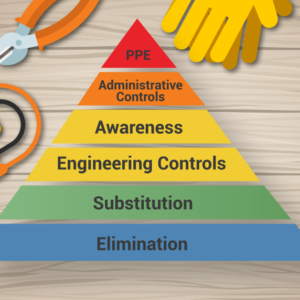 This course is intended to: refresh knowledge and understanding of the key elements of electrical safety; and, safe working procedures specific to electrical working.
 -
 Construction contractors realize that safety, productivity, and quality are inextricably linked. They are moving to implement programs that extend beyond regulatory compliance and take a more proactive stance toward protecting their employees in the field.
 -
 In this course you’ll learn about the background, vision and challenges of the electrical controls technology capability. There will also be an application example to further explore the challenges of applying this technology in industry and how these can be overcome.
 -
 This course is the product safety element of mandatory training for all employees. It aims to help us live up to the value of operating safely by enhancing our awareness of product safety.
 -
 The online fire safety course provides in-depth and comprehensive training in fire safety for organizations. This course covers all aspects of fire safety, from fire awareness and fire extinguisher training to fire warden training and fire risk assessments. By the end of the course, your employees will be well-informed and prepared to handle any fire-related situation.
 -
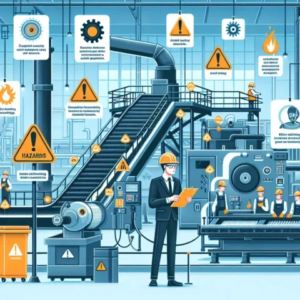 You’ll become familiar with machinery safety at the end of this course. You will also learn about the risks associated with work equipment. This course will enable you to do your daily job safely, resulting in improved company Health, Safety, and Environment.
 -
 To provide those involved with, or responsible for, an overview of the safety requirements using chemical safety.
 -
This course is designed to assist with meeting the requirements of the Personal Protective Equipment at Work Regulations and an employer's duties concerning the provision and use of PPE in the workplace.
-
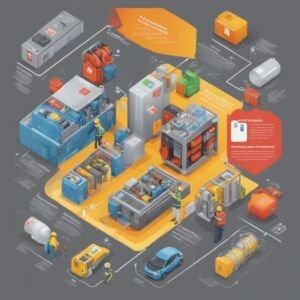 This course is designed for individuals who need to access areas where Energy Storage Systems are being developed, assembled, or maintained. It introduces the hazards associated with high-energy battery systems and the necessary safety regulations for those working near or with these systems.
 -
 This course is aimed at those who are interested in the application of composite materials for the development of efficient lightweight structural designs.
 -
 Providing a practical understanding of fatigue and fracture calculations, this course is intended for engineers who are required to perform such calculations, or who specify or evaluate testing and draft fatigue or fracture portions of design requirements.
 -
 Computational fluid dynamics (CFD) has become an essential tool in the analysis and design of thermal and fluid flow systems in wide range of industries. Few prominent areas of applications of CFD include meteorology, transport systems (aerospace, automobile, highspeed trains), energy systems, environment, electronics, bio-medical (design of life support and drug delivery systems), etc.
 -
 This course is crafted for students specializing in civil/structural engineering and enthusiasts eager to gain a solid foundation in structural analysis.
 -
 This course provides a general overview on the theories of contact mechanics, relevant for a wide range of disciplines ranging from materials science to engineering and geophysics. Introducing their theoretical foundations, the physical aspects of the resulting nonlinearities induced by such phenomena are emphasized.
 -
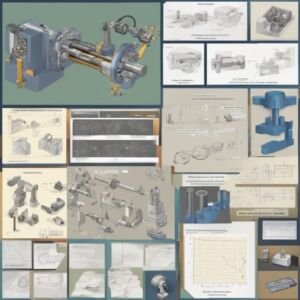 An overview of design philosophies and good design practice for structural durability and damage tolerance of structures.
 -
 In this course, engineers with backgrounds in mechanical, structural or related engineering disciplines will learn how to compute natural frequencies and response to dynamic forces, and designs to reduce vibration of new and existing systems.
 -
 Develop a strong foundation on stress analysis and demonstrate the ability to analyse a range of structural problems.

