-
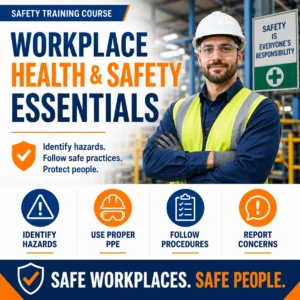 Foundational workplace H&S covering duties, hazard spotting, risk controls, safe behaviors, incident reporting, and emergency awareness?helping teams reduce common injuries and build a stronger safety culture.
 -
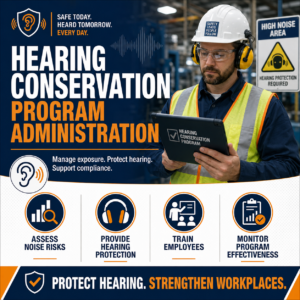 Hearing conservation program administration: exposure assessment, control options, hearing protection selection, training, audiometry coordination, and records to prevent noise?induced hearing loss.
 -
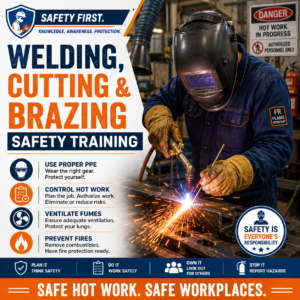 Hot work safety for welding, cutting, and brazing: permits, fire watch, cylinder handling, fume controls, ventilation, and PPE to prevent burns, fires, and exposures.
 -
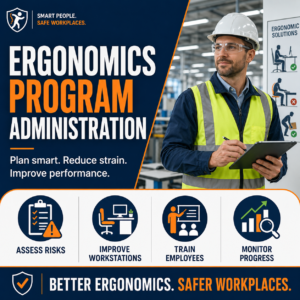 Ergonomics program administration: risk screening, task/workstation assessments, control planning, training, and evaluation to reduce musculoskeletal disorders and improve comfort.
 -
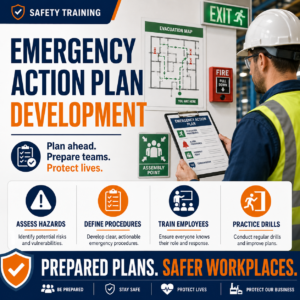 Create an Emergency Action Plan (EAP): alarms, evacuation routes, assembly points, roles, communications, drills, and review steps to ensure fast, organized response.
 -
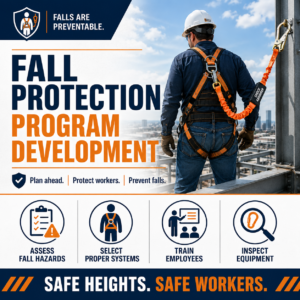 Develop a fall protection program: hazard assessment, system selection, anchor planning, equipment inspection, training needs, rescue planning, and routine audits for work?at?height tasks.
 -
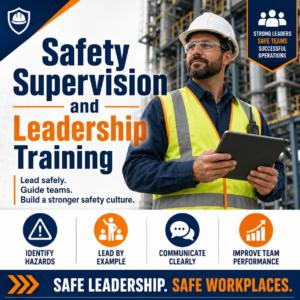 Supervisor safety leadership skills: coaching, briefings, inspections, risk management, incident response, and reinforcing accountability to improve safe performance across teams.
 -
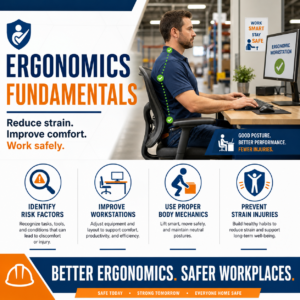 Ergonomics fundamentals covering MSD risk factors, task/workstation design, safe manual handling, and practical controls to reduce discomfort and injury risk.
 -
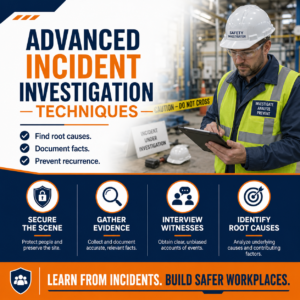 Advanced incident investigation: evidence collection, interview skills, human factors, causal analysis, and corrective action validation to prevent recurrence and strengthen learning.
 -
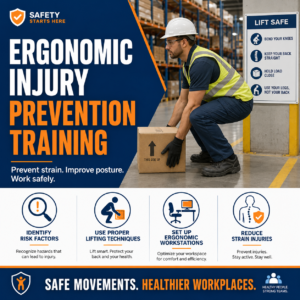 Ergonomic injury prevention covering risk factors, safe lifting, posture and task design, micro-breaks, and practical controls to reduce strains and repetitive injuries.
 -
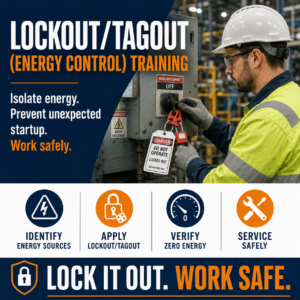 Lockout/Tagout training covering energy isolation, shutdown and verification steps, servicing practices, group lockout basics, and common errors that lead to unexpected start?up injuries.
 -
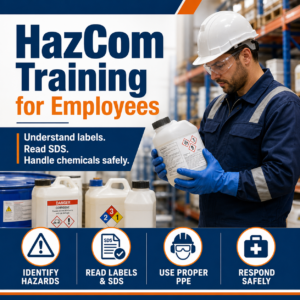 Employee HazCom training on labels and pictograms, SDS use, exposure routes, safe handling and storage, spill response basics, and reporting to prevent chemical injuries and illness.
 -
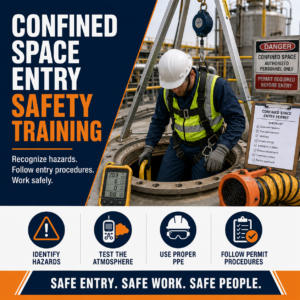 Confined space entry safety: permits, hazard identification, atmospheric testing, ventilation, isolation, attendant duties, communications, and rescue planning to prevent asphyxiation and toxic exposure.
 -
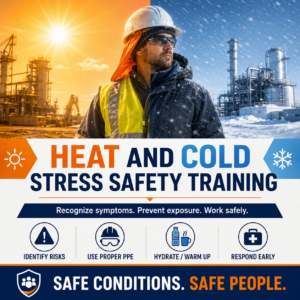 Heat and cold stress safety covering risk factors, early warning signs, protective measures, work planning, and emergency response for temperature extremes.
 -
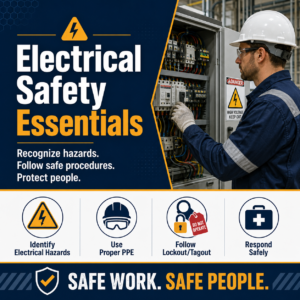 Electrical safety essentials: hazard awareness, safe planning, isolation principles, inspection routines, and PPE basics to reduce risk of shock, burns, and arc incidents.
 -
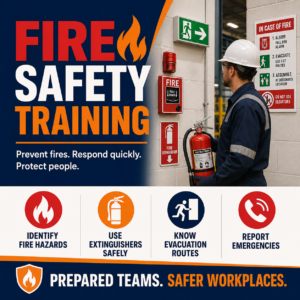 Fire safety basics covering ignition sources, prevention controls, alarms and evacuation, extinguisher awareness, and housekeeping and inspection routines that reduce the likelihood and impact of workplace fires.
 -
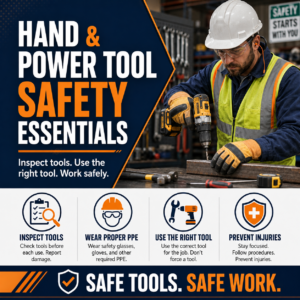 Hand and power tool safety: correct tool selection, inspection, guarding, safe handling, maintenance, and PPE to reduce cuts, flying debris injuries, and shock risks.
 -
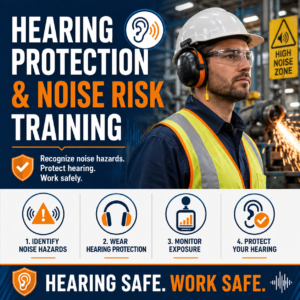 Noise and hearing protection training covering exposure awareness, control strategies, and correct selection and use of hearing protection to prevent hearing loss.
 -
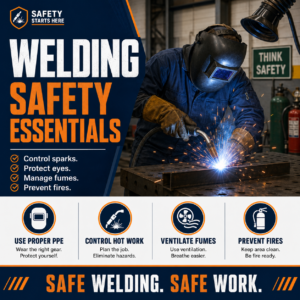 Welding safety essentials covering hot work hazards, fume and ventilation controls, fire prevention, equipment checks, cylinder handling, and PPE to prevent burns and respiratory exposure.
 -
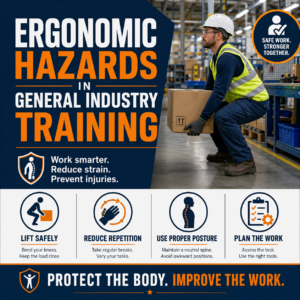 General industry ergonomics training covering common MSD risk factors, workstation setup, manual handling controls, and practical interventions to reduce strains and sprains.
 -
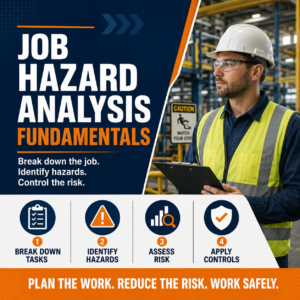 JHA fundamentals covering task-based hazard identification, control selection, worker involvement, documentation, and review cycles for safer routine and non?routine work.
 -
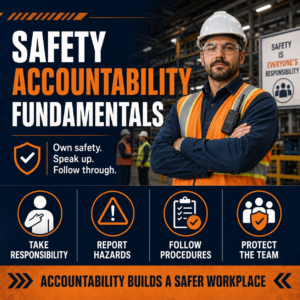 Safety accountability fundamentals: define roles and expectations, use leading indicators, coach performance, and apply consistent follow?through so teams own controls and reduce risk.
 -
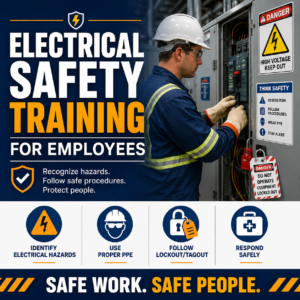 Employee electrical safety covering hazard awareness, safe behaviors around equipment, defect reporting, isolation/LOTO awareness, and practical steps to prevent shocks, burns, and arc incidents.
 -
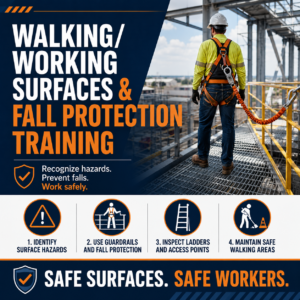 Walking/working surfaces and fall protection basics: hazard identification, surface inspections, covers and guardrails, ladder awareness, and practical controls to reduce same?level and height?related falls.
 -
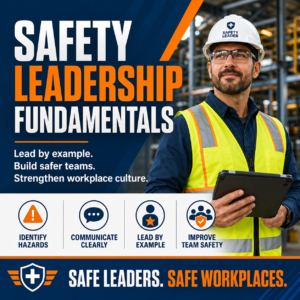 Safety leadership fundamentals: setting expectations, engaging teams, communicating risk, reinforcing safe behaviors, and driving continuous improvement to build a proactive safety culture.
 -
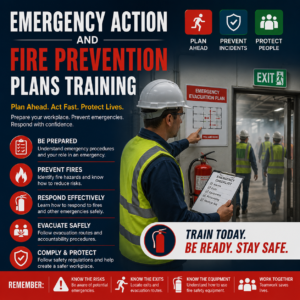 Emergency action and fire prevention planning: evacuation routes, alarms, roles, communications, drills, housekeeping, and ignition?source controls for coordinated response and prevention.
 -
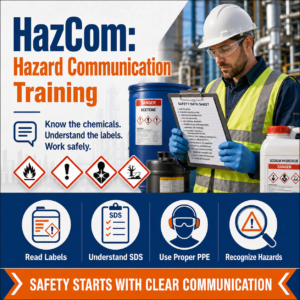 Hazard communication training covering labels, SDS, pictograms, exposure controls, safe storage/handling, and spill response fundamentals for safer chemical use.
 -
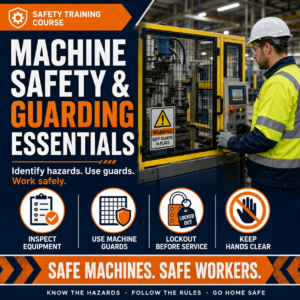 Machine safeguarding and guarding essentials: identify hazards, choose guarding methods, set safe distances, perform inspections, and apply energy-isolation awareness to prevent entanglement, crush, and cut injuries.
 -
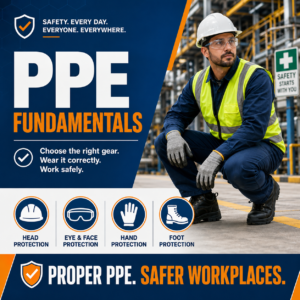 PPE fundamentals covering hazard-based selection, correct donning/doffing, fit basics, limitations, and care?helping reduce injury and exposure when risks can?t be fully engineered out.
 -
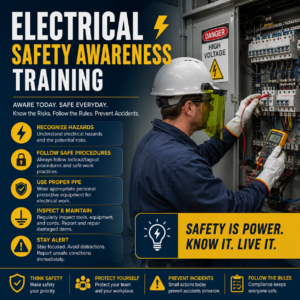 Electrical safety training covering hazard awareness, safe work planning, isolation/LOTO basics, equipment checks, and PPE fundamentals to prevent shock, burns, and arc incidents.